
One of the first things anglers may notice when fishing Southwest Florida in late summer and fall is the amount of bait moving through the water.
Large schools of mullet can appear along shorelines, around passes, and throughout backwater areas. When that happens, predatory fish have an abundant food source moving through the same waters.
This seasonal movement is commonly called the mullet run.
For anglers around Marco Island, the movement matters because it can influence where predatory fish feed and how they position themselves. Knowing how to read that activity can be more useful than simply knowing where mullet are present.
The Mullet Run Follows the Bait
The mullet run is a seasonal movement of mullet that becomes more noticeable in late summer and fall. The timing is not tied to a specific date, however, because weather, water conditions, tides, and bait movement can affect when larger concentrations appear.
That makes the calendar less useful than watching what’s actually happening on the water.
There is also a difference between seeing mullet and seeing mullet that are being actively pressured. A school moving steadily along a shoreline may simply be traveling. Mullet that repeatedly scatter, change direction, or get pushed toward shallow water can indicate that predators are nearby.
For anglers, those behavioral changes are often more useful than the size of the school itself.
Predators Use Mullet Movement to Their Advantage
Marco Island and the surrounding Ten Thousand Islands provide plenty of structure where predatory fish can intercept moving bait. Mangrove shorelines, grass flats, oyster bars, tidal creeks, backcountry passes, and nearby Gulf waters create different feeding opportunities.
The most useful areas are often places where mullet are being funneled through a limited route, giving predators an opportunity to intercept them.
| Water Feature | Potential Advantage for Predators |
|---|---|
| Mangrove points | Provide structure for ambushing passing bait |
| Passes | Funnel bait through moving water |
| Creek mouths | Concentrate bait as water moves in and out |
| Shallow shorelines | Limit the space available for bait to escape |
| Current edges | Give predators access to moving forage without holding in the strongest flow |
Predators also do not necessarily sit directly beneath the largest bait school. Snook may use structure or current edges, while redfish may work shallow areas. Tarpon, jacks, sharks, and other predators can use different parts of the same bait movement depending on the habitat and conditions.
The practical lesson is to watch the edges and escape routes around the bait, not just the middle of the school.
Surface Activity Can Reveal Predator Pressure
Once a school of mullet is located, the surface can provide clues about what is happening below it.
Mullet naturally create splashes and surface disturbance, so a single splash does not necessarily mean a predator is feeding. More convincing signs include:
- Mullet repeatedly changing direction
- Bait being pushed toward a shoreline
- Several disturbances occurring in the same area
- Birds concentrating over bait
- Predators striking along the edges of the school
The pattern matters more than one isolated splash.
When bait repeatedly reacts in the same area, anglers have a better reason to investigate that location rather than moving simply because they have spotted another school farther away.
Tide and Current Change the Opportunity
The mullet run is a moving pattern, and the tide helps determine where that pattern becomes useful for fishing.
As water moves through the Ten Thousand Islands, bait can shift between shorelines, creek mouths, passes, flats, and deeper channels. Predators may reposition with it rather than remain in the same place throughout the day.
A few general patterns can help:
- Incoming tide: Bait may move toward shallow areas and shorelines.
- Outgoing tide: Bait can move toward creek mouths, passes, and deeper channels.
- Strong current: Predators may hold along the edges of moving water.
- Changing current: Fish may reposition as the direction or strength of the flow changes.
This is one reason a location that looked productive earlier in the trip may become less useful later. The structure has not changed, but the water moving around it has.
For visiting anglers, that distinction is important. Returning to the same spot because bait was there earlier does not necessarily mean the same opportunity will still be present. A productive approach is to reassess the bait, current, and surrounding structure as conditions change.
Why the Mullet Run Matters Around Marco Island
The mullet run matters because it can bring an abundant food source into the same shallow, nearshore, and backcountry waters where predatory fish feed.
Its value for anglers is not simply the presence of mullet. The real opportunity comes from recognizing how the bait is moving, where predators can intercept it, and how the tide and current are shaping that interaction.
That makes the mullet run better understood as a moving fishing pattern than as a particular location or guaranteed bite.
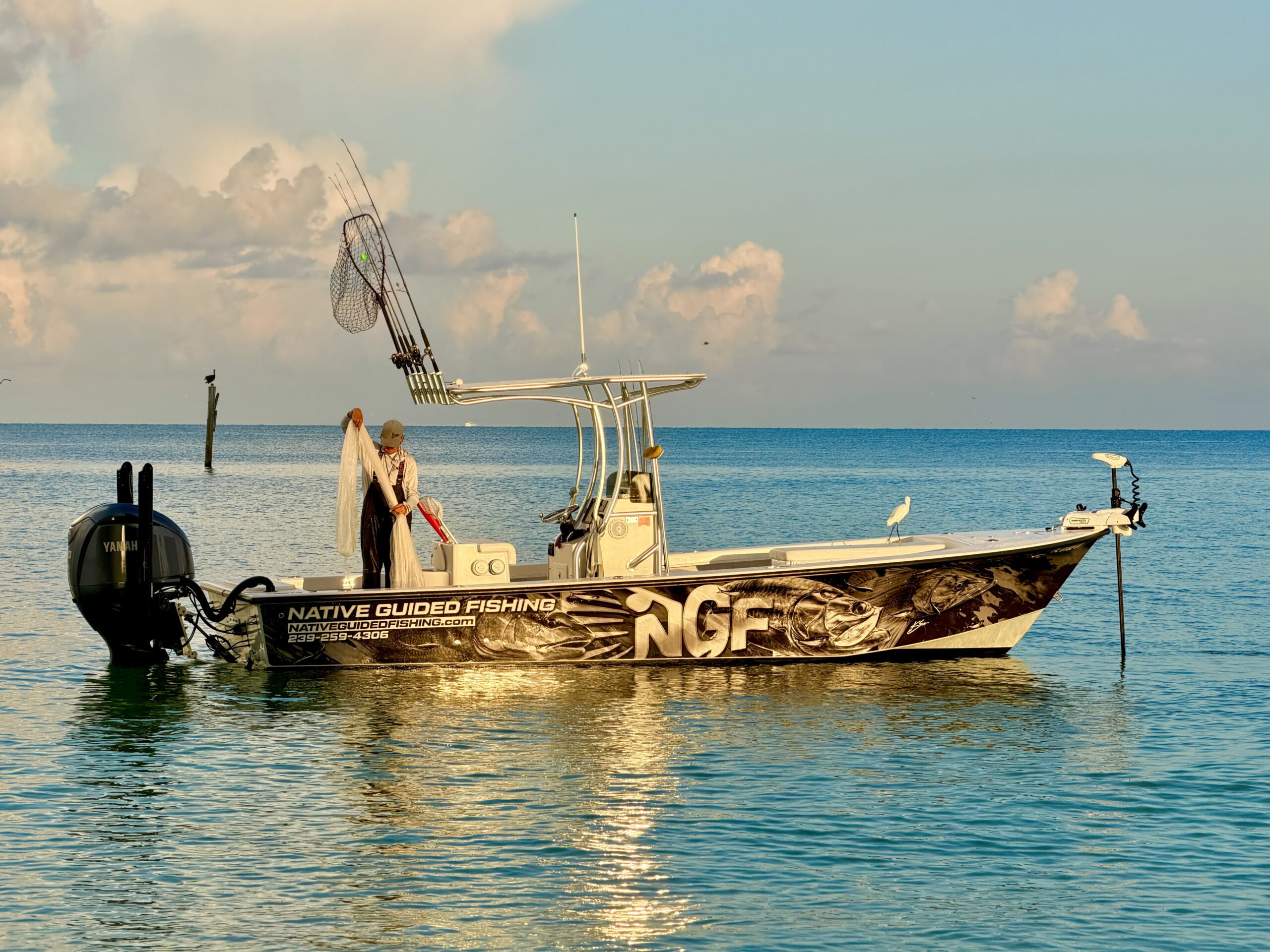
Around Marco Island, Goodland, and the Ten Thousand Islands, anglers may encounter that pattern around passes, flats, mangrove shorelines, oyster bars, and backcountry waters. Native Guided Fishing’s backwater charters regularly fish these types of environments and target species including snook, redfish, and tarpon.
Local knowledge can help connect changing bait, tides, and conditions to practical decisions about location and timing rather than relying on one particular spot.
Frequently Asked Questions
Does the mullet run happen at the same time every year?
It is generally associated with late summer and fall, but the timing and intensity can vary. Weather, water conditions, tides, and bait movement can all influence when larger concentrations become noticeable.
Can anglers find mullet without seeing predators?
Yes. Finding bait does not automatically mean predators are actively feeding. Bait behavior, current, structure, and other signs of activity can help anglers evaluate whether a school is worth fishing.
Is there a best time of day to fish the mullet run?
There is no single time that guarantees better fishing. Tide, bait movement, weather, and predator activity can all influence when an area becomes productive.
Can the same mullet school fish differently throughout the day?
Yes. As the tide and current change, both bait and predators can reposition. A school that appears unproductive at one point may become more relevant when the surrounding water movement changes.
Does the mullet run matter for species besides snook?
Yes. Mullet can attract a range of predatory fish, including redfish, tarpon, jacks, and sharks, depending on the habitat, season, and local conditions.
Native Guided Fishing — Fishing Charters in Marco Island & Goodland, FL
If you are looking for an unforgettable day on the water, Native Guided Fishing offers professionally guided fishing trips throughout Southwest Florida.
Whether you are visiting Goodland, Marco Island, Naples, or the surrounding coastal waters, our experienced captains will take you through some of Southwest Florida’s diverse fishing waters while helping you improve your skills and enjoy the experience.
From beginners to experienced anglers, every trip is designed to provide an exciting and memorable day on the water.
Book your guided fishing adventure.
Ready to book your trip? Browse our full charter lineup, or jump straight to backwater fishing or offshore fishing charters.