
Late summer fishing in Southwest Florida can still provide outstanding opportunities for anglers. While temperatures are higher and fish behavior changes throughout the day, species like snook, redfish, tarpon, spotted seatrout, and mangrove snapper remain active across the region.
One of the most common questions we hear is whether the summer heat makes fishing less productive.
In most cases, the heat itself isn’t the biggest challenge. Success often depends on fishing at the right time of day, understanding the tides, locating bait, and adjusting to how fish respond to changing conditions.
If you’re planning a fishing trip around Marco Island, Goodland, Naples, or the Ten Thousand Islands, knowing the best time of day to fish during the summer can make the difference between chasing fish and consistently finding them.
Early Morning Fishing: The Most Consistent Summer Bite
One pattern we see on guided trips is that the first few hours after sunrise often provide the most consistent fishing of the day.
During the early morning, baitfish are active, water temperatures are cooler, and predators like snook, redfish, and spotted seatrout frequently move into shallow water looking for an easy meal.
Early morning fishing is especially productive around:
- Mangrove shorelines
- Grass flats
- Oyster bars
- Creek mouths
- Backwater channels
Around Marco Island and the Ten Thousand Islands, many successful mornings begin by locating bait activity. When baitfish move along shorelines or through tidal channels, gamefish are usually close behind.
One mistake we occasionally see is anglers arriving later in the morning and fishing the same shallow water that produced fish at sunrise. By that time, snook often move tighter into mangrove cover while trout and redfish transition toward deeper edges or stronger current.
Why Midday Summer Fishing Requires a Different Approach
A common misconception is that fish completely stop feeding once the sun gets high overhead. In reality, most species simply reposition.
As water temperatures rise, snook often seek the shade of mangroves and docks, while spotted seatrout frequently slide toward deeper grass edges where water temperatures remain more stable.
During midday trips, productive locations often include:
- Mangrove shade lines
- Bridge pilings and structure
- Deeper channels
- Current breaks
- Areas where moving tides concentrate bait
Throughout the Ten Thousand Islands, small environmental changes can make a significant difference. A stronger incoming tide may push bait into an area and create an excellent feeding opportunity, while slower water movement often requires changing locations or presentations.
Summer thunderstorms can also influence fishing by changing water clarity, salinity, and bait movement, all of which affect where predator fish choose to hold.
Evening Fishing Can Create Another Strong Bite Window
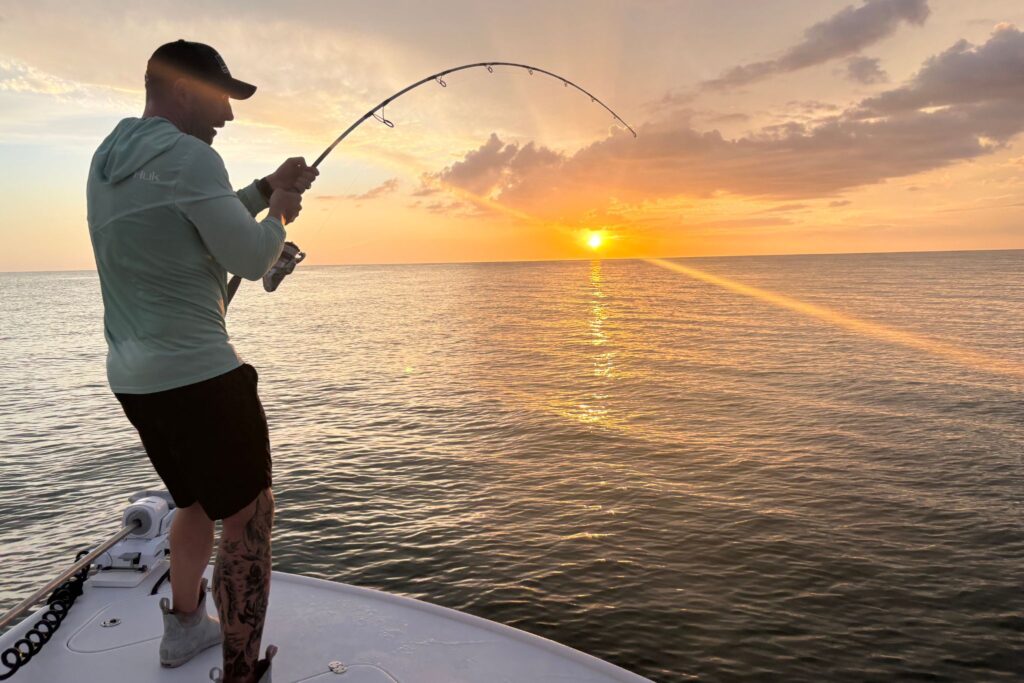
While early morning is often considered the best time of day to fish during the summer, late afternoon and early evening can also provide outstanding opportunities.
As the sun begins to set, water temperatures gradually cool, baitfish become more active, and many gamefish move back into shallower water to feed before nightfall.
Around Naples, Marco Island, and Goodland, productive evening fishing often focuses on:
- Mangrove edges
- Shallow grass flats
- Creek entrances
- Moving water around points and channels
- Shoreline structure
It’s common to see areas that seemed quiet during the middle of the afternoon suddenly come alive as light levels begin to fade. Watching for bait movement often provides the first clue that predators have become active again.
How Tides and Bait Activity Influence Summer Fishing
Water temperature certainly plays a role during late summer, but tides and bait movement often have an even greater influence on where fish feed.
Throughout Southwest Florida, predator fish consistently follow bait as it moves along shorelines, oyster bars, mangrove edges, and tidal channels.
One question we hear regularly is why a spot that produced fish yesterday may seem empty today.
The answer often comes down to changing conditions.
Differences in tide stage, current strength, wind direction, and water clarity can quickly reposition both bait and gamefish. For example, snook may hold tight against a mangrove shoreline during a strong incoming tide but move toward deeper water or nearby structure as conditions change.
Rather than fishing the same locations every trip, successful anglers adjust their approach by following the conditions and letting bait activity guide their decisions.
Adjusting Your Strategy for Late Summer Conditions
Consistent late-summer fishing success often comes from recognizing when fish behavior changes throughout the day.
On many guided trips, our strategy evolves as conditions change. Early mornings are often spent covering shallow water where fish are actively feeding. As temperatures rise, we shift toward structure, deeper water, stronger current, and presentations that match where fish have repositioned.
Helpful late-summer adjustments include:
- Starting your trip early
- Planning around productive tide changes
- Targeting shaded structure during the hottest part of the day
- Watching closely for bait activity
- Moving when fish reposition instead of waiting for them to return
One lesson we’ve learned guiding anglers throughout Southwest Florida is that spending more hours on the water doesn’t always produce better fishing. Paying attention to changing conditions often leads to far more productive days.
Frequently Asked Questions
Is late summer too hot to fish in Southwest Florida?
No. Late summer continues to offer excellent fishing opportunities throughout Marco Island, Naples, Goodland, and the Ten Thousand Islands. Fishing during productive tide windows and cooler parts of the day often leads to the best results.
What is the best time of day to fish during the summer?
Early morning is typically the most consistent because baitfish are active, water temperatures are cooler, and many species feed aggressively before the heat of the day.
Can you still catch snook and redfish during the hottest part of the day?
Yes. Midday fishing often means targeting fish that have moved to:
- Mangrove shade
- Deeper channels
- Bridge structure
- Areas with moving current that concentrates bait
Do tides really matter during summer fishing?
Absolutely. Tide movement plays a major role in positioning both bait and predator fish. Even a productive area can fish completely differently depending on the stage and strength of the tide.
Can you still catch tarpon during late summer?
Yes. Tarpon remain active throughout much of the summer, particularly around passes, deeper channels, and areas with strong moving water. Planning trips around favorable tides and early morning or evening conditions often increases your chances of success. early morning or evening periods can improve opportunities when targeting these fish.
Native Guided Fishing — Fishing Charters in Marco Island & Goodland, FL
If you are looking for an unforgettable day on the water, Native Guided Fishing offers professionally guided fishing trips throughout Southwest Florida.
Whether you are visiting Goodland, Marco Island, Naples, or the surrounding coastal waters, our experienced captains will take you to productive fishing locations while helping you improve your skills and enjoy the experience.
From beginners to experienced anglers, every trip is designed to provide an exciting and memorable day on the water.
Book your guided fishing adventure.
Ready to book your trip? Browse our full charter lineup, or jump straight to backwater fishing or offshore fishing charters.