
One of the most common points of confusion when booking a fishing charter is the difference between nearshore and offshore fishing. The two terms get used interchangeably by some operators, and that lack of clarity can lead to real disappointment when your group expects a deep sea experience but ends up anchored on an inshore wreck a few miles from the beach. Here’s a straightforward breakdown of what each trip actually involves — and what you should know before you book.
What Is Nearshore Fishing?
Nearshore fishing refers to trips that operate within approximately 9 miles of the coastline — also known as state waters. These trips target nearshore structures like artificial reefs, natural ledges, and wrecks that sit in relatively shallow water, typically ranging from 20 to 80 feet deep.
Nearshore trips are more accessible, shorter in duration, and generally less expensive than true offshore charters. They’re a good option for anglers who want to get out on the open water without committing to a long offshore run, or for groups where some members might be prone to seasickness in rougher conditions.
What to Expect on a Nearshore Trip
Nearshore wrecks and reefs do hold a variety of species — grouper, snapper, amberjack, and more. However, it’s important to set realistic expectations. Due to the high volume of recreational fishing pressure on these accessible structures, nearshore spots are heavily fished year-round. The result is that while you can absolutely catch fish on a nearshore trip, the grouper and snapper you encounter are often smaller than most first-time anglers expect.
The larger, trophy-caliber fish have largely been removed from nearshore structures over the years — a direct consequence of overfishing and the sheer number of boats that work these spots on any given weekend. If you’ve seen photos of massive grouper and assumed that’s what a nearshore trip delivers, it’s worth knowing that those fish are almost certainly coming from much deeper, farther offshore water.
That’s not to say nearshore fishing isn’t worthwhile — it absolutely can be. But going in with accurate expectations makes for a better experience for everyone.
What Is Offshore Fishing?
True offshore fishing — often referred to as “deep sea” fishing — means leaving the coast behind entirely. A legitimate offshore trip runs a minimum of 20 to 25 miles from shore, and depending on weather conditions and target species, it’s not uncommon to travel 40 to 50 miles or more into federal waters.
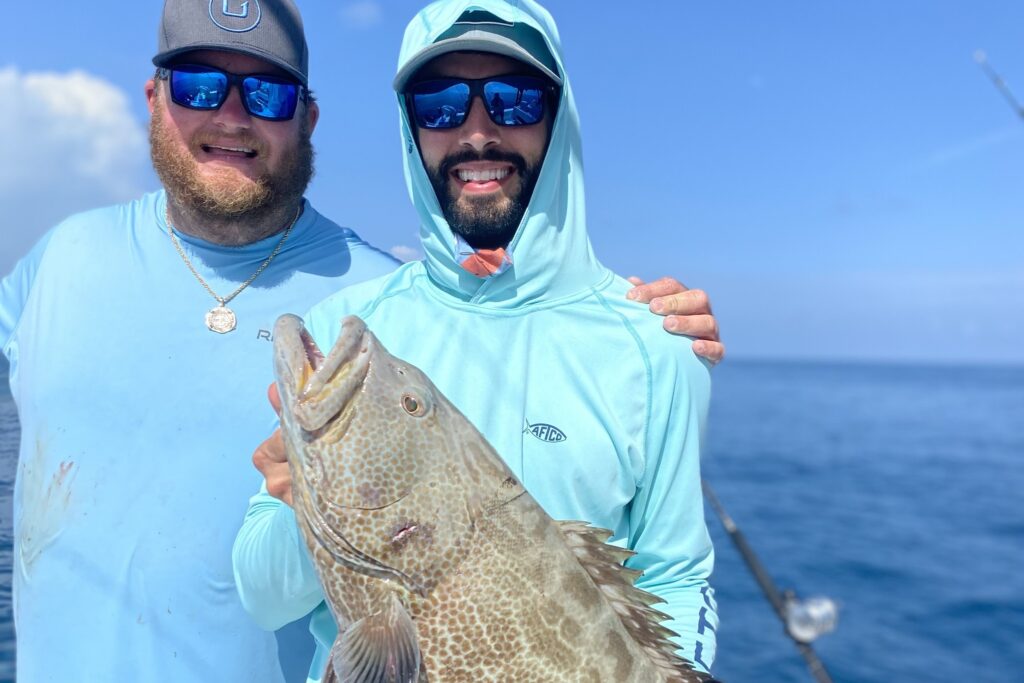
At that distance, the water deepens significantly, structure changes dramatically, and the fish are a completely different story. Larger grouper species like gag, red grouper, and scamp thrive in the deeper ledges and hard bottom found offshore. Mangrove snapper, red snapper, amberjack, and pelagic species like mahi-mahi, wahoo, and king mackerel all become realistic targets depending on the season.
Offshore trips are longer, more physically demanding, and subject to weather windows that don’t always cooperate. But when conditions align and you’re anchored on productive bottom 30 or 40 miles out, the fishing is in a completely different category than anything available nearshore. These are the trips people talk about for years.
The Price Reality: What an Offshore Trip Actually Costs
If you’re pricing offshore charters and come across a company offering a “deep sea” or “offshore” trip for under $1,800, there’s a very good chance you’re actually looking at a nearshore trip — regardless of what it’s called in the marketing.
Running a legitimate offshore charter is expensive. The fuel alone for a round trip of 40 to 80 miles on a capable offshore vessel can easily run several hundred dollars. Add in the cost of the boat, maintenance, insurance, mate wages, gear, bait, and ice, and the economics of a true offshore trip simply don’t allow for heavily discounted pricing. A price point well under $1,800 should raise questions about where the boat is actually going.
The Federal Reef Permit: Something Most Anglers Don’t Know
Here’s a fact that most recreational anglers — and even some experienced fishermen — don’t know: in order to legally operate a paid charter that targets reef fish (grouper, snapper, and related species) beyond 9 miles offshore in the Gulf of Mexico, a vessel must hold a Federal Reef Fish Permit issued by NOAA.
These permits are not easy to obtain. They are limited in number, tied to specific vessels, and traded on an open market — where demand frequently pushes prices to $30,000 or more per permit, per vessel. That’s a significant operational cost that legitimate offshore operators carry and build into their pricing.
A charter that is advertising offshore reef fishing but doesn’t hold a Federal Reef Fish Permit is either operating illegally or, more commonly, isn’t actually going offshore at all. It’s one of the most important questions you can ask when vetting a charter: “Do you hold a Federal Reef Fish Permit, and how far offshore do your trips actually run?”
How to Choose the Right Trip for Your Group
Neither nearshore nor offshore fishing is the wrong answer — they serve different purposes, and the right choice depends on your group’s goals, budget, and tolerance for a longer run offshore.
If you want a fun, action-packed day on the water with a mix of species and a more relaxed experience, a nearshore trip can deliver that. Go in knowing the fish will likely be smaller and manage expectations accordingly.
If you want the full deep sea experience — the big grouper, the pelagic runs, the fishing that lives up to the photos — budget appropriately for a real offshore charter, ask the right questions, and make sure the operator can back up what they’re selling.
The best thing you can do before booking any charter is have an honest conversation with the captain about exactly where the boat goes, what species are realistic given the conditions and season, and what your group is actually hoping to experience. A trustworthy operator will give you straight answers — and that transparency is worth a lot before you spend a day on the water.
Book with Confidence
At Native Guided Fishing, we believe in honest conversations about what every trip involves. Whether you’re looking for an inshore adventure in the backwaters of Marco Island or want to discuss what a true offshore excursion looks like, we’ll give you the straight story so you can make the right call for your group.
Reach out today and let’s find the right trip for you.
Ready to head offshore? Browse our offshore fishing charter options or check our seasonal guide for the best targets.